















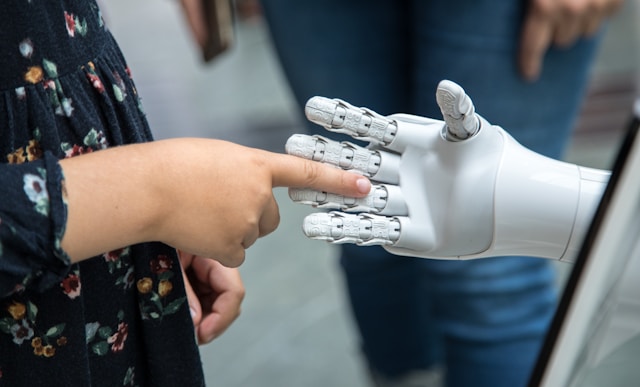
MIT researchers have built a wearable ultrasound wristband that, paired with AI, reads muscle and tendon movements under the skin to control a robotic hand in near real time. In lab tests with eight volunteers, the system mirrored intricate finger gestures—including all 26 letters of American Sign Language—within about 120 milliseconds by decoding the hand’s 22 degrees of freedom. The wireless setup can remotely pilot a robot or collect large datasets of human motions to train humanoids to perform household chores and other dexterous tasks without continuous human guidance. The approach, led by mechanical engineering professor Xuanhe Zhao, highlights a push to give AI richer sensory input from the physical world, with potential applications ranging from home assistance to surgery and advanced prosthetics.
MIT uses AI and ultrasound to turn hand motions into training fuel for dexterous robots
- Trending
- Comments
- Latest