










How the act of seeing has shifted from light to computation, and why meaning remains human.
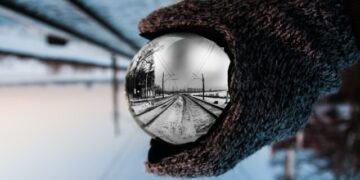
For more than a century, the camera defined how humanity captured reality. Its glass lens gathered light, its shutter froze time, and each photograph was a record of the world as it appeared. The act of seeing was mechanical yet faithful. The device did not interpret; it simply received.
Today, the lens has been replaced by algorithms. What once passed through glass now passes through data. The new camera does not look outward but inward, drawing its vision from probability instead of photons. It does not see or understand; it calculates. Through a process called diffusion, the model reconstructs the appearance of vision by adjusting patterns of numbers until coherence emerges.
This marks a turning point in the history of perception. The age of optics was bound to the physical world. The age of AI is bound to abstraction. Where the old camera documented, the new one invents. It synthesizes images that have never been seen, guided not by light but by language. The result looks like imagination, but it is the imitation of it — a mirror polished by mathematics.
This essay explores that transformation. It traces how vision moved from physics to computation, how diffusion models simulate the process of seeing, and why the essence of meaning remains untouched by machines. Artificial intelligence may generate images, but it does not perceive their content. The lens is gone, but the eye of understanding is still human.
The Age of Optics
For most of modern history, human vision was extended by glass and chemistry. The first cameras captured the world by directing light through a lens and fixing it onto a surface. The photograph was an imprint of photons, a trace of what had once stood before the observer. In that process, there was no ambiguity about truth. The camera could only record what light revealed. It could not invent.
The power of optics was its honesty. The instrument depended on the physics of the world, not on the imagination of the maker. To photograph a mountain was to register the mountain’s light. The resulting image carried the authority of presence. Each exposure was a negotiation between the eye and nature, between the observer and what existed beyond perception.
This discipline of light shaped how people understood knowledge itself. To know was to observe. To represent was to capture. The scientific spirit of the nineteenth and twentieth centuries was built upon this faith in visibility. What could be seen could be measured, and what could be measured could be trusted.
As technology evolved, cameras grew more sophisticated but their principle remained the same. Whether on film or a digital sensor, the act of seeing still required a scene to exist. The lens was a conduit between the real and the representational.
The image, in that older sense, was always a reflection of reality’s surface. Even when manipulated, it began with truth. A painter might interpret; a photographer could only frame.
This faith in optics also defined the first visual industries. Journalism, cinema, and advertising all relied on the authority of the lens. The image was persuasive because it carried evidence. A photograph might be composed or idealized, but it was anchored in the physical world.
When digital photography replaced film, the transition seemed revolutionary, yet the foundation did not change. Pixels replaced chemicals, but light remained the source of meaning. A digital image was still a map of light intensities, a transformation of the real through computation. The machine performed arithmetic, but the world still supplied the numbers.
That continuity made the next shift even more radical. When artificial intelligence began to generate images from text, the origin of vision itself moved. The machine no longer needed to witness anything. It created without light, without subjects, without seeing. The bond between optics and truth began to dissolve.
In that moment, the meaning of vision changed from perception to prediction. The image was no longer a record of the world but a possibility computed within it. The question was no longer what the camera saw, but what the model could infer.
The Birth of Computed Vision
The next revolution in seeing began quietly, inside data. The shift did not start with a new lens but with a new logic. Researchers discovered that if a model could learn how images degrade into noise, it could also learn how to reverse that process. Out of this insight came the idea of diffusion models, systems that could start from pure randomness and move step by step toward an image that looked real.
This new kind of vision did not depend on light at all. It was not a matter of reflection or exposure but of reconstruction. Instead of photons, the model processed probabilities. It learned how patterns of pixels tended to appear together in real data and used those relationships to rebuild structure. The result could look like a photograph, yet no camera had ever taken it.
What made this transformation profound was not only the method but the meaning. The traditional camera saw the world through optics, grounded in physics. The new system sees through data, grounded in statistics. One works by receiving light; the other works by predicting likelihoods. Both produce images, but only one is tethered to the external world.
The model’s power lies in its capacity to imitate. By studying vast numbers of examples, it learns which patterns of color and form usually coexist. When asked to create, it does not remember a picture; it reconstructs a statistical echo of one. This process gives the appearance of imagination without the presence of understanding. The system follows mathematical gradients that point toward coherence, but it never perceives what coherence means.
This distinction is crucial. When a person paints, they bring experience, intention, and emotion to the act. When a diffusion model generates an image, it performs optimization. Its goal is to reduce difference between noise and structure according to rules it has been trained to follow. It does not know that it is producing a tree or a face. It is arranging numbers until the pattern aligns with human expectation.
The birth of computed vision thus represents both continuity and rupture. It continues the human desire to reproduce reality but replaces perception with simulation. Where optics once translated light into image, computation now translates data into resemblance. The outcome may be visually identical, but the origin has changed. The photograph bore witness; the generated image invents.
This shift has philosophical consequences. The authority of the image, once tied to its reference to the real, now depends on statistical plausibility. In the age of optics, truth was measured by exposure. In the age of AI, truth is measured by probability. The question becomes not “Is this what was seen?” but “Is this what could be seen?”
The Statistical Camera
The new camera does not use a lens or a shutter. It begins with noise. Instead of capturing light from the outside world, it starts with a random field of pixels that contain no information at all. The process of creation is one of refinement rather than exposure. Through thousands of steps, the model gradually transforms chaos into form by following mathematical gradients that point toward higher probability.
Each step in this process is guided by what the model has learned from data. During training, it studies millions of real images, each corrupted with varying levels of noise. Its task is to predict how the noise should be removed. Over time, it learns the direction that leads from disorder to order. When generation begins, it reverses that path, moving from pure randomness toward patterns that resemble the images it once studied.
This is why we can call it a statistical camera. It does not record what exists but computes what is likely to exist. Every pixel it places is chosen not because of light but because of probability. The model has no concept of a scene or an object. It knows only relationships between numerical patterns that humans interpret as visual forms.
This distinction is subtle but fundamental. The optical camera captures evidence. The statistical camera captures possibility. It produces an image that might have been real but was never seen. Its authority rests not on observation but on the consistency of its internal logic.
For many, this feels like a leap toward creativity. A diffusion model can produce endless variations on a theme, painting new combinations of landscapes, faces, and textures. Yet this creativity is mechanical. It is variation without vision. The model does not imagine alternatives; it explores configurations permitted by the data it has absorbed.
The mathematics of this process are elegant. Each step is governed by the vector field of probabilities that describe how real images cluster in high-dimensional space. The model follows these directions automatically, adjusting the pixel values to move closer to the manifold where structure lives. The result is an image that fits the learned distribution, a reconstruction that obeys statistical gravity.
The term “sampling” describes this act of generation. The model samples from its internal map of visual likelihoods. Each sample begins differently because the initial noise is random, but all end within the same region of coherence. The diversity of outputs gives the illusion of invention, but the process remains bounded by training. It cannot move beyond the territory it has been shown.
What is remarkable is how convincingly this statistical process replicates the look of perception. The textures, shadows, and perspectives seem deliberate, as if the model had seen. Yet no seeing takes place. The system operates entirely in numerical space, manipulating arrays of probabilities. What appears as sight is a form of computation that has learned to resemble it.
This is why the diffusion model challenges our cultural definition of photography. The image it produces carries no trace of the world. It has no origin in time or place. It is not a moment captured but a moment computed. It looks like memory but contains none.
Still, these images resonate with human imagination because they appeal to familiar patterns. The model reproduces the statistical signatures of what we recognize as real. The eye accepts the result because it fits expectation. The mind assigns meaning to a form the machine cannot comprehend.
In this way, the statistical camera becomes a mirror of human interpretation. It reflects our collective data, our visual habits, and our cultural biases. Its apparent creativity is an echo of our own, filtered through the mathematics of probability.
From Light to Language
The transformation from optics to computation does not end with images. It extends into language itself. The same principles that allow a diffusion model to reconstruct pictures from noise now allow systems to generate text, sound, and even design. The essential idea is always the same: begin with randomness, then move toward coherence by following the gradients of probability learned from data.
In traditional vision, the pathway from idea to image required tools. The artist needed a brush, the designer a camera, the filmmaker a lens. Each tool imposed its own technique and limitation. In the new paradigm, the tool is replaced by a prompt — a simple line of language that directs the statistical field toward a specific region of meaning. The words act as coordinates in the space of possibility.
This is a profound inversion of creation. Light once entered the camera through a physical aperture. Now meaning enters the model through words. A phrase such as “a sunset over the desert” becomes the starting condition for the diffusion process. The model interprets this linguistic cue not through understanding but through association. It searches the learned relationships between words and images, gradually guiding the generation toward patterns that fit that description.
The result is an image that appears to have been imagined, yet it is assembled mechanically from statistical memory. The system does not know what a desert is or what a sunset means. It processes the correlations that in human data have linked those words to specific visual arrangements. What looks like imagination is an algorithm translating language into likelihood.
This shift from light to language redefines the nature of representation. The old photograph bore witness to the world; the new image bears witness to culture. It is not a reflection of nature but of collective description. Every word we use to direct a model carries the history of human association, embedded in data drawn from countless texts and images. When the system responds, it reproduces those associations with mathematical precision, not awareness.
Language thus becomes the new lens through which reality is reconstructed. The act of speaking to a model replaces the act of aiming a camera. The prompt has become the aperture, controlling what the machine will simulate. Through this lens, we are not capturing what exists but requesting what might exist according to the patterns of our recorded imagination.
This development also changes the economics of creation. Once, producing a visual idea required skill, time, and physical apparatus. Now, expression begins with intention alone. The barrier between concept and result has collapsed. The diffusion model functions as a universal translator between thought and image, between instruction and appearance. Yet this power conceals a limitation. The machine does not share the intention it executes. It carries out correlation, not comprehension.
This is why the output of generative systems can astonish and unsettle at once. Their efficiency exposes how much of creativity can be modeled statistically, yet their limits reveal how little of meaning can. The model can reproduce style, structure, and coherence, but it cannot experience them. It turns words into form, but it does not know why that form matters.
In that sense, the move from light to language is not an expansion of perception but a reorganization of imitation. The machine mirrors our descriptions of the world rather than the world itself. It projects the surface of understanding without ever reaching the depth of it. The human mind remains the only source of meaning because it alone inhabits experience.
The Illusion of Understanding
When we watch a diffusion model transform noise into a coherent image, it is easy to believe that something inside the system understands what it is doing. The sequence of refinements looks purposeful. The picture seems to emerge from a process of recognition. Yet this impression is an illusion. What appears to be comprehension is only the alignment of numbers following rules that minimize error.
Artificial intelligence does not understand in any human sense. It does not know what an image represents or why it might evoke emotion. It manipulates probability distributions. The model moves through mathematical space, adjusting values so that its outputs resemble the patterns of real data. Its precision can mimic intention, but intention is absent.
This illusion arises because humans project meaning onto behavior. When a machine generates an image of a sunrise, the human viewer supplies the interpretation. The model is not imagining dawn or beauty. It is executing the diffusion process until the pixels reach a statistically stable configuration that matches examples labeled as sunrises in its training data. The sense of recognition comes from us, not from the system.
This misunderstanding has deep roots. Since the beginning of computing, people have confused output with awareness. When a machine responds coherently, we attribute thought. When it produces novelty, we infer creativity. Yet what we are seeing is the consequence of scale and computation. A system trained on millions of examples can interpolate between them with extraordinary subtlety, producing results that feel original without ever transcending its data.
Understanding, in the human sense, involves consciousness of meaning. It requires awareness of context, memory of purpose, and a capacity for reflection. None of these qualities exist in artificial intelligence. The model knows nothing beyond its parameters. It has no inner state of curiosity, no sense of why one output might be more truthful or beautiful than another. Its learning is mechanical adjustment, not comprehension.
The illusion is amplified by the realism of the results. The images are so detailed, the compositions so plausible, that they trigger the same cognitive responses we associate with perception. The brain, encountering familiarity, assumes awareness behind it. Yet this is a reflection of our own pattern recognition, not the machine’s. We are seeing our own interpretive faculty mirrored back to us.
Recognizing this distinction is essential for ethics as well as for science. When we believe that AI understands, we risk assigning it authority it does not possess. We allow simulation to replace judgment. In fields such as art, design, and communication, the danger is subtle but real: the more convincing the imitation, the easier it becomes to forget that no one is behind it.
To appreciate what diffusion models truly achieve, we must separate imitation from insight. Their brilliance lies in efficiency, not awareness. They compress vast cultural memory into a form that can be recombined, but they never add new meaning. They are tools for arrangement, not agents of thought.
The illusion of understanding reminds us that intelligence cannot be reduced to correlation. True understanding involves experience, emotion, and self-reference — qualities that arise from being, not from data. The diffusion model processes relationships between symbols; the human mind lives them. One operates on representation; the other inhabits reality.
What makes the current moment so complex is that the machine’s lack of understanding does not prevent it from producing convincing representations. This is both the power and the peril of generative AI. It democratizes creation but also blurs the boundary between knowledge and noise. The challenge for humanity is not to teach the machine to feel but to remember that it cannot.
The path forward begins with clarity. AI systems do not perceive, imagine, or comprehend. They calculate. Their beauty lies in the elegance of that calculation, not in the illusion of mind. To treat them as tools rather than partners is not to diminish them but to see them accurately. The machine does not share our understanding; it reflects it.
Meaning and Authorship
If the diffusion model does not understand, then who or what gives meaning to its creations? The answer returns us to the human observer. Every generated image, every line of synthetic text, becomes meaningful only when interpreted by a mind capable of reflection. Without that act of interpretation, the output remains a configuration of data, coherent in form but empty of experience.
In the era of optics, authorship was visible. The photographer stood behind the camera, the painter behind the canvas. The relationship between creator, tool, and world was explicit. Each image carried the trace of a viewpoint. Even mechanical reproduction preserved individuality, because the act of framing a scene involved intention.
The diffusion model changes this balance. It separates intention from execution. The prompt replaces the gesture, and the output arrives through automation. What was once a craft of manual precision becomes a dialogue of probability. Yet despite this abstraction, authorship does not vanish. It moves upstream, from the manipulation of tools to the articulation of ideas.
When a person writes a prompt, they define direction. They decide what should be invoked, constrained, or avoided. The machine performs the calculation, but the human defines the intent. In that sense, the author’s role becomes one of conceptual design rather than physical composition. The artistry lies in formulating the language that shapes the model’s statistical pathways.
This does not make the process less creative, but it redefines creativity. In generative systems, control arises from subtraction as much as addition — from telling the model what not to do as much as what to produce. The boundaries of instruction become part of the art. The dialogue between freedom and constraint replaces the brushstroke as the central act of creation.
Yet no matter how sophisticated the tool, the model’s capacity remains bound by training. It can remix and interpolate but cannot originate meaning. Its images borrow coherence from the data of human culture. Every pattern it generates is a reflection of collective memory, distilled into numerical relationships. The illusion of authorship it presents is statistical, not personal.
For the human creator, this introduces a new ethical and philosophical challenge. When originality becomes indistinguishable from recombination, what defines ownership? The diffusion model blurs the line between inspiration and replication, between the individual and the archive. Each image draws on countless unseen influences, many of which belong to others. The author becomes a curator of probability.
This shift requires a renewed understanding of authorship as responsibility. The human must not only guide the model but also take ownership of its implications. The words used in a prompt carry weight. They determine which visual histories are reanimated, which biases are reinforced, which representations are normalized. To create through AI is to participate in a feedback loop that shapes future data. Meaning flows forward as well as backward.
In this context, authorship becomes a form of stewardship. The creator must ensure that intention remains ethical and transparent, that the work acknowledges its origins in collective knowledge. The machine cannot be accountable because it has no comprehension of consequence. It cannot recognize harm or truth. Only the human participant can hold those values.
Thus, even as artificial intelligence transforms the mechanics of creation, it leaves the question of meaning untouched. The model can produce the image, but not the significance. It can follow instruction, but not purpose. The understanding that animates art, communication, and insight remains exclusively human. What the system generates is potential; what we perceive within it is meaning.
As technology advances, this division may become easier to forget. Yet the distinction between pattern and perception is what protects the integrity of culture. Without awareness, there is no authorship. Without intention, there is no art. The diffusion model is a powerful mirror, but only the human mind can see what it reflects.
The Human Horizon
Every technology in history has extended a human sense. The telescope expanded sight, the microphone amplified hearing, and the computer multiplied memory. Artificial intelligence continues that lineage but alters its direction. It does not extend perception outward into the world; it reflects perception inward into data. It shows us not what exists, but what we have collectively described as existing.
This inversion carries both promise and peril. On one hand, it reveals the extraordinary richness of human imagination. With a few words, we can summon entire worlds, not by skill of hand but by precision of thought. On the other hand, it exposes how easily meaning can become detached from experience. When images no longer require subjects, and when language itself becomes a tool of synthesis rather than understanding, the link between seeing and knowing begins to fray.
The horizon of this transformation is not technological but philosophical. The question is no longer what machines can generate, but what humans will choose to mean. The power of artificial intelligence lies in simulation. It can reproduce style, structure, and plausibility. Yet only human consciousness can assign purpose. Without a mind to interpret, a generated world is a mirror with no viewer.
The diffusion model, for all its complexity, teaches a simple truth about intelligence. Learning in machines is not discovery but adjustment. It is the fine-tuning of mathematical relationships until order appears. The model exhibits the appearance of insight without awareness, the structure of reasoning without thought. Its brilliance lies in its precision, not its perception.
The human mind, by contrast, transforms information into experience. It connects data with desire, memory with imagination, and knowledge with emotion. Meaning arises not from patterns themselves but from the capacity to live them. When we see an image of a sunrise, we recall warmth, time, and renewal. The model produces the same image without any of those sensations. It captures the form of reality but not its substance.
Recognizing this difference defines the boundary of human responsibility. The danger is not that machines will become sentient but that we will mistake simulation for understanding. When prediction replaces perception, we risk losing contact with the world that inspired the images in the first place. The challenge of the AI era is to remember that technology, however advanced, remains an instrument of representation. It cannot replace the experience it depicts.
The horizon of intelligence, therefore, is ethical as much as cognitive. The systems we design reflect our priorities, our biases, and our sense of meaning. The vector fields and probability gradients that guide diffusion models are built upon human data. Every output is a map of collective attention. To create responsibly is to acknowledge that inheritance and to use it with care.
In this light, the relationship between humanity and AI becomes a dialogue rather than a contest. Machines extend what we know, but they cannot define what we value. They can calculate coherence but not truth. They can generate resemblance but not reality. The measure of progress is not how lifelike the models become, but how wisely we interpret their results.
As vision moves from optics to AI, we are reminded that the essence of seeing has always been human. The camera once captured the light of the world; the model now captures the echo of our descriptions. Both depend on the observer to complete the act of meaning. The future of intelligence will not belong to the system that predicts most accurately but to the mind that understands most deeply.
To see is to interpret. To create is to intend. Artificial intelligence does neither. It organizes symbols into structure, but it does not know the world it describes. The horizon of meaning remains human because only we can cross it.
The Return to Meaning
The movement from optics to AI is more than a technological change; it is a transformation in how humanity relates to reality. The camera once captured what existed. It required a scene, light, and a point of view. The diffusion model creates what could exist. It begins with noise and reconstructs the appearance of order through probability. One records the world; the other reconstructs its patterns.
This difference may seem abstract, but it carries immense cultural and ethical weight. When an image no longer bears witness to a moment in time, its relationship to truth changes. The photograph testified; the generated image suggests. The first invited reflection on the world; the second invites reflection on the data. The subject of vision has shifted from nature to information.
Artificial intelligence excels at reconstruction because it imitates the relationships that define human perception. Yet it does not perceive. It finds structure within data, not meaning within experience. It produces the surface of intelligence without its depth. The model moves through gradients of probability; the mind moves through gradients of significance. Between those two lies the entire distance between imitation and understanding.
To call this distinction philosophical would be to underestimate its impact. In business, art, education, and communication, the difference between structure and meaning will define the boundaries of responsibility. The machine can automate the mechanics of representation, but it cannot replace the act of comprehension. Every AI-generated image, text, or idea remains incomplete until a human interprets it. The system provides possibility; the human provides purpose.
The lesson of this transformation is not technological humility but intellectual clarity. Artificial intelligence extends our capacity to generate, but not our capacity to understand. It reveals that much of what we call creativity can be formalized, yet it also reminds us that true insight cannot be. The essence of thought lies in the awareness of meaning, not in the manipulation of symbols. The model produces coherence; the human mind produces understanding.
As we stand at the threshold of this new age, we must remember that technology reflects its creators. The vector fields that guide diffusion models are built from the archive of human expression. Every algorithm inherits the biases, values, and beauty of the data it consumes. What we build into these systems, they will return to us amplified. The ethics of artificial intelligence begin not in the code but in the culture that shapes it.
The passage from optics to AI marks not the end of seeing but the beginning of reflection. We are moving from tools that record the external world to systems that mirror the internal one. The new image is not a window but a map of collective imagination. Its truth is statistical, not experiential. It tells us less about the world and more about ourselves.
In the end, meaning remains human because understanding requires experience, and experience cannot be computed. The machine can describe but not witness, calculate but not care, replicate but not believe. It can show us the pattern of thought, but never thought itself.
The horizon of artificial intelligence will always stop at the edge of awareness. Beyond that boundary begins the domain of consciousness, where perception becomes understanding and information becomes insight. As vision moves from optics to AI, the task of humanity is to stay on the side of meaning — to see not only what the machine can generate, but what only the mind can know.