









Inside the invisible fields that guide diffusion models from randomness to meaning
Every act of intelligence begins with direction. Whether in a human mind or a machine, learning is not the storage of answers but the discovery of how to move toward truth. In this article, we explore how modern generative models, known as diffusion models, learn to find their way back from noise to reality. Beneath their apparent magic lies a quiet geometry of guidance, an invisible field of arrows that always point toward structure. Understanding this process shows that intelligence, whether human or artificial, depends on recognizing small signals of order within apparent chaos.
The Return Journey
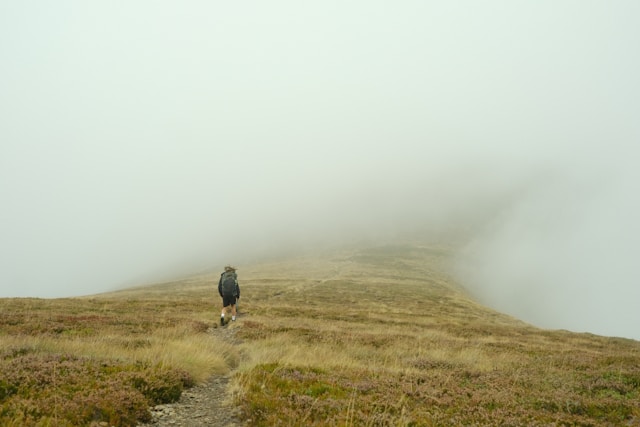
Imagine standing in a thick fog. You cannot see the horizon or the path home, only a faint pull, a sense that one direction feels more right than another. Step by step, you follow that invisible guidance until the outlines of the world begin to return. That is what a diffusion model does when it generates an image from noise. It cannot see the final picture in advance. It does not imagine, understand, or intend; it simply moves according to patterns it has learned, following probabilities rather than thoughts. It can only feel the subtle pull of reality, the faint gradients that tell it which way structure lies. These invisible directions form what scientists call a vector field, and within that field lives the model’s sense of truth.
Every modern generative model, from those that paint to those that compose, relies on this field as its compass. It is the geometry of learning made visible, the quiet map that leads from confusion to coherence.
The Invisible Arrows of Reality
Think of the universe of all possible images as a vast ocean of points. Each point represents one possible arrangement of pixels, one possible picture the model could imagine. Most of these points correspond to nonsense, random static with no pattern. Only a few live near the surface of reality, where structure and meaning exist.
Around every point in this ocean there is a tiny arrow. The arrow shows the direction toward higher probability, the direction in which the data of the real world tends to cluster. Collect all these arrows, and you have a field of guidance that runs through the space of possibilities.
When a diffusion model learns, it is not memorizing images. It is learning these arrows, these directions of return. It builds an internal sense of where meaning resides and how to move toward it.
This field is called the score function, but that name hides its beauty. It is more than an equation. It is a whisper from the data itself, telling the model how to find its way home.
The Geometry of Gradients
To understand how these arrows arise, picture a landscape of probability. Imagine that the places where real data lives form gentle valleys, and the places of randomness rise as hills. A point of pure noise sits high on the slopes, far from any valley of meaning. The gradient, a concept borrowed from calculus, simply describes the direction in which the ground slopes most steeply downward. Follow that slope, and you descend into the valley where real data dwells. The gradient is not a command but a tendency, a soft push that always points toward coherence.
When the diffusion model works, it does precisely this. Starting from noise, it looks around in this imaginary terrain and asks, which way is downhill toward reality? It takes a small step in that direction, then asks again. Each step is minute, but taken together they trace a long and graceful path from chaos to form.
The model never sees the full valley. It only senses the slope beneath its feet.
From Chaos to Compass
During training, the model learns this terrain by watching the world unravel. It takes images from the real world and slowly corrupts them with noise. At each stage of destruction, it tries to predict the direction that would reverse the process. Every time it makes that guess, it adjusts itself slightly. With millions of examples, the network begins to internalize a sense of direction. It learns the invisible map of how structure decays and how it can therefore be rebuilt.
What emerges from this long apprenticeship is a compass. It does not store the original pictures; it stores the currents that lead back to them.
When the model finally begins to create, it starts from nothing but random static. It consults its compass, takes one small step, checks again, and continues. Gradually, the static gives way to form. The arrows it learned in silence now guide its motion through the fog of possibility.
If a model had only randomness, it would wander endlessly through meaningless configurations. If it had only direction, it would reproduce the same patterns forever. The vector field reconciles the two, allowing each act of creation to be both grounded and novel.
We do the same when we create. When an artist paints, they do not see the finished work before them. They sense what feels closer to harmony, to meaning, to truth. Each brushstroke adjusts the picture along an inner gradient of coherence.
Creativity, then, is guided wandering, a movement through uncertainty that is shaped by invisible preferences. The vector field is the mathematical expression of that intuition.
Guidance and Control
The beauty of the vector field is that it can be steered. When we type a text prompt into a diffusion model, we tilt the field slightly toward our intention. The model still follows its learned arrows of realism, but now those arrows lean toward what the words describe.
The process is subtle. The text is transformed into another field that nudges the image in directions consistent with language. The model still walks through the same fog, but now the breeze carries a trace of meaning, a whisper of words shaping its path.
Think of a sailor adjusting the sail to catch the wind. The sea and the current remain the same, yet the boat begins to turn toward a chosen destination. That is how prompting works. The model never commands the image into being; it simply steers probability along new lines.
In this sense, every act of guidance is a conversation between intention and reality. We do not order the machine to imagine; we invite it to follow us toward a shared horizon of meaning.
Seeing the Field
It is difficult to picture such an abstract concept, yet there are ways to glimpse it. In the two-pixel spiral, for example, we can draw arrows on a flat plane showing how each point should move to return to the spiral. The result looks like a whirlpool, the currents of probability swirling inward toward structure.
In real models, the space has millions of dimensions. We cannot see those directions, but the principle is the same. Each denoising step follows one of those invisible arrows. Each image that emerges is the trace of a long journey through a hidden field.
If you could slow time and watch a diffusion model work, you would see a cloud of points dancing back into order, each guided by a private compass. What looks like magic is simply geometry in motion, a ballet of vectors tracing the shortest path from nonsense to sense.
The Human Parallel
Human learning works much the same way. We also live in high-dimensional space, not of pixels but of ideas. When we begin to study something new, we are lost in noise. Facts collide, arguments contradict one another, and meaning hides in confusion.
Over time, we build a field of direction within our minds. We start to sense which questions are worth asking, which paths lead toward understanding, which ideas pull us closer to coherence. We follow gradients of meaning long before we can explain them.
A writer feels when a sentence is almost right. A musician feels when a note resolves tension. A scientist feels when an idea fits. None of this is logic at first; it is the intuition of slope, the sense that one direction leads deeper into truth.
Our inner field, like the model’s, is not static. It changes with experience, refines with error, and grows with exploration. Each failure reshapes the map, teaching us where not to go. Each success strengthens the current that guides us forward.
The Ethics of Direction
Every vector field reflects the data that formed it. For machines, that data comes from the world we give them. If the world contains bias, the arrows will inherit it. They will point toward certain patterns more than others, reinforcing what already exists.
This is why direction matters as much as destination. The model does not invent its field; it absorbs it from us. If we feed it a distorted view of reality, it will faithfully follow those distortions.
Ethical guidance, therefore, is not only about limiting what AI produces, but also about shaping the terrain it learns to navigate. We are the cartographers of its probability landscape. The fairness of its arrows depends on the integrity of the world they were drawn from.
To teach an AI to move toward truth, we must define truth with care. The geometry of learning is also the geometry of values.
The Mathematics Beneath the Metaphor
Beneath these images lies a precise mechanism. The vector field corresponds to the gradient of the log probability of the data. This gradient, often written as the score, points toward the regions where real examples cluster.
During training, the model observes how noise is added to data and learns to predict the direction that would reduce that noise. Each prediction teaches it a little more about the underlying structure of reality.
When it generates, the process runs in reverse. Starting from pure noise, it applies its learned field step by step. Each iteration denoises the image slightly, moving it closer to the manifold of real data. The final image appears not by magic, but by faithfully following the learned gradient.
The equations may be abstract, but their meaning is universal. They describe the motion of learning itself, the steady climb from randomness toward pattern, from uncertainty toward understanding.
The Art of Following
To follow a vector field is to trust direction over certainty. The model does not know the destination; it only knows the path. Each step depends on the last. The entire journey unfolds through local choices, small corrections, quiet alignment.
Human creativity is the same. We never see the full picture of what we are making. We take a step, feel its consequence, and adjust. Every great work of art or science begins with such incremental movement, guided by a field of intuition that grows clearer with every attempt.
Learning is not leaping to knowledge; it is following gradients of sense until form appears.
The Compass and the Landscape
In diffusion models, the vector field is only half of the story. The other half is the landscape it moves through. The field has no meaning without the terrain, and the terrain has no shape without the field. Together they form the structure of intelligence.
In our own thinking, the same relationship holds. The ideas we carry form the landscape; our values and intuitions form the field. Every decision, every interpretation, every act of imagination is a step through that geometry.
What matters most is not that the map be perfect, but that the compass remains honest. A slightly tilted compass can still find its way if it keeps correcting itself, sensing again and again where coherence lies.
That is the essence of learning, both human and artificial, a continual negotiation between the known and the unknown.
Returning to Reality
At the end of its journey, the diffusion model produces an image that did not exist before. Yet it feels real because it lies within the valley of probability that defines our world. The model has followed the invisible arrows of its training, step by step, until noise became form.
The act of creation, in this view, is not invention but return. It is the rediscovery of structure folded within randomness, the recognition of pattern within chaos. Every new image is a reminder that order is never lost, only hidden.
When we learn, we do the same. We walk through confusion guided by intuition, adjusting our steps as meaning begins to emerge. We follow gradients of understanding until the fog clears and the landscape of knowledge appears.
The vector field, then, is not only a mechanism of machines but a metaphor for the human mind. It teaches us that truth is not reached in a single leap but approached through countless small movements in the right direction.
The Horizon of Meaning
If we could watch the diffusion model’s world from above, we would see a vast ocean of points, each connected by invisible currents flowing toward islands of reality. Every current represents a possibility, every path a story of return.
Somewhere in that ocean, a single random point begins to drift. It follows the currents, adjusts its path, and moves closer to coherence. Step by step, it becomes an image, a thought, a fragment of understanding.
That journey from noise to meaning is not unique to the machine. It is the story of all learning, the quiet motion of life itself seeking order in uncertainty.
The fog never fully lifts, and the horizon always recedes, but that is what keeps both minds and models moving. The vector field does not end; it only leads ever closer to reality.
Conclusion
Every act of understanding begins with confusion. Every path to truth begins with a question. What guides us through that uncertainty is not memory or formulas but direction, the gentle pressure that pulls us toward coherence.
In the geometry of learning, this direction is the vector field. In the language of experience, it is intuition. Both are compasses pointing toward structure in the midst of chaos.
To follow the vector field back to reality is to remember that meaning is not given; it is found. It is traced through gradients, built through patience, and rediscovered through motion.
Learning, in the end, is not about knowing where to go. It is about sensing which way feels true, and moving toward it, one step at a time, until the shape of reality comes gently into view.