











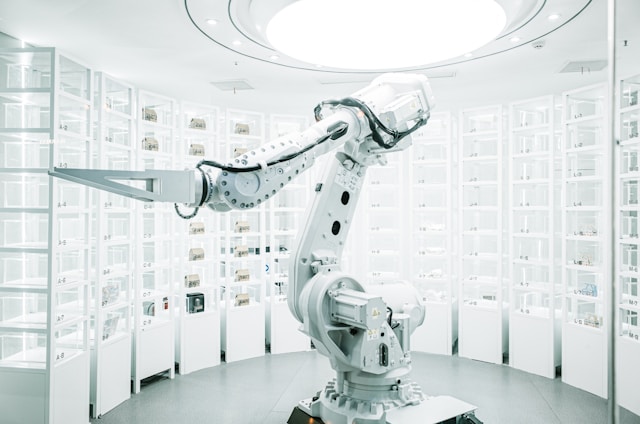
At its GTC conference, Nvidia moved to cement its role at the center of the robotics boom, unveiling new simulation frameworks and foundation models aimed at speeding deployment of “physical AI” from labs to factory floors and hospitals. The chip maker said industry stalwarts including ABB, Fanuc, Yaskawa and Kuka are adopting its Omniverse and Isaac toolchains to validate robot fleets in digital twins, while partners ranging from Figure and Agility to Skild AI build generalized “robot brains” atop its new Cosmos 3 and GR00T models. Nvidia also pushed into healthcare, with CMR Surgical and Johnson & Johnson MedTech using its simulation and data-generation tools to train and test surgical systems, and previewed next-gen humanoid capabilities powered by its Jetson Thor platform. The effort broadens a growing ecosystem with cloud providers and integrators to generate synthetic data and manage large-scale training, even as Nvidia cautioned that product roadmaps and outcomes remain subject to change.
Related articles:
NVIDIA and Global Industrial Software Giants Bring Design, Engineering and Manufacturing Into the AI Era
NVIDIA Announces Open Physical AI Data Factory Blueprint to Accelerate Robotics, Vision AI Agents and Autonomous Vehicle Development
NVIDIA Enters Production With Dynamo, the Broadly Adopted Inference Operating System for AI Factories