











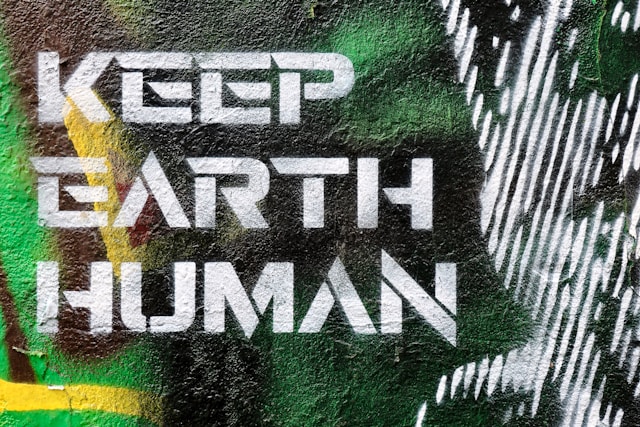
Artificial intelligence is often described as astonishing. It can analyze oceans of data, make predictions, and even master games like chess and Go that once seemed to demand uniquely human intelligence. These achievements are impressive, but they should not blind us to a deeper truth. For all its power, AI falls short in ways that reveal how remarkable the human mind truly is. Machines calculate, but people live, imagine, and create. The difference matters more than ever.
AI does not experience the world. A system can recognize a coffee cup in an image, yet it knows nothing about the sensation of steam rising or the warmth of holding the cup in your hands. Human understanding comes through sight, touch, taste, sound, and smell woven together into a rich experience of life. Data alone cannot replicate that. Without sensation, there is no true understanding, only classification.
AI also lacks the emotions that give life its depth. It can detect a frown or analyze tone of voice, but it does not feel sadness or joy. When a chatbot responds with a polite phrase like “I understand you are frustrated,” it is not offering comfort. It is simulating the surface of empathy without the substance. A human being can listen with compassion and respond in a way that builds trust and connection. That difference is not cosmetic, it is the heart of what it means to be human.
The human condition is more than patterns of behavior. It is shaped by love, friendship, grief, and hope. AI can measure certain signals, perhaps even detect signs of depression in someone’s speech, but it cannot grasp the inner weight of those experiences. A therapist offering comfort to a patient in despair brings not just analysis but presence, empathy, and shared humanity. No machine can substitute for that.
Relationships highlight another gap. Human bonds are layered with history, unspoken signals, shared memories, and subtle tensions. AI might detect that two people sound tense in conversation, but it cannot perceive the years of trust, betrayal, reconciliation, and love that lie beneath. Human intuition reads these layers instantly. Machines cannot.
Purpose also separates us. AI executes tasks because it is programmed to do so. It never asks why. Humans constantly search for meaning, whether in creating art, raising families, or working toward a better future. A system might optimize a factory line, but it does not care if that makes workers’ lives easier or harder. It does not dream of sustainability or fairness. Humans do.
Machines also fail when it comes to reasoning about the bigger picture. They are built to predict patterns, not to imagine what lies beyond the data. A traffic system powered by AI may optimize light cycles at an intersection, but it will never suggest redesigning the city or rethinking transportation for future generations. Planning for tomorrow requires foresight and imagination. That belongs to us.
AI is bound to the past. It makes predictions based on what has already happened. It cannot leap into new possibilities the way people can. Investors and analysts saw how the COVID-19 pandemic shattered economic forecasts. Models built on past data did not anticipate it. Humans adapted, reimagined, and invented new ways of working and living. The ability to envision futures that do not yet exist is a human trait that no dataset can supply.
Imagination and creativity are often claimed as areas where AI is catching up. It can produce paintings, poems, and songs that seem original. Yet beneath the surface lies imitation. The machine is rearranging patterns it has already seen. True creativity requires leaps into the unknown, guided by emotion, intuition, and risk. A poet experimenting with new forms or an artist inventing a new movement is not predicting the next pattern but breaking from it. That spark is absent in code.
Humans are also masters of improvisation. AI can only handle situations that resemble its training. When confronted with a novel or unfamiliar problem, it falters. Consider a customer with an unusual request. A human representative can think flexibly and find a creative solution. A machine will likely fail or respond with confusion. Improvisation and adaptability are hallmarks of intelligence that cannot be reduced to algorithms.
Curiosity is another dividing line. AI does not wonder. It does not wake up with the impulse to explore or to ask new questions. Humans are restless seekers, probing mysteries, inventing science, and traveling into space not because the data told us to but because curiosity drives us forward. The child who asks why the sky is blue is doing something no machine can: searching for meaning beyond the available information.
Common sense may seem too obvious to mention, yet it is exactly what AI lacks. A person knows instinctively not to touch a hot stove. A child quickly learns that water makes things wet and fire burns. Machines require explicit programming or extensive data to learn the same lessons, and even then they may fail in unexpected contexts. That absence of lived experience limits them in ways that are easy to overlook until they cause real mistakes.
Humans also reason by analogy, drawing lessons from one domain to solve problems in another. An engineer may apply insights from nature to design a new structure. A doctor may notice that a case reminds them of something entirely different they once encountered. AI struggles with this. If it has not seen the pattern before, it mislabels or misjudges. The ability to transfer knowledge across boundaries is another uniquely human strength.
Intuition cannot be explained by data alone. People often reach correct conclusions without conscious reasoning. A detective might sense something is wrong before the evidence appears. A doctor might feel uneasy about a patient who otherwise seems fine. These moments of insight guide decisions in ways machines cannot replicate. AI requires explicit inputs and remains blind to what lies outside its rules.
Life is unpredictable. Emergencies, accidents, and sudden changes demand rapid adaptation. AI falters in chaos. A medical system might recommend treatments based on stable conditions, but in a fast-moving crisis it cannot improvise in real time. A doctor at the bedside can. The human ability to navigate uncertainty is irreplaceable.
Reflection is another gift machines lack. People question themselves, reassess their assumptions, and grow. AI never asks whether its output is appropriate or ethical. It does not pause to wonder if its response could cause harm. It only follows instructions. Human progress depends on our capacity to challenge our own thinking and to act with conscience.
These differences matter. AI is a powerful tool, but it is a tool. It does not live, feel, or imagine. It does not dream of a better world. The danger is not that AI will replace us but that we might forget what makes us unique. Our creativity, empathy, adaptability, and search for meaning are not optional extras. They are the essence of intelligence.
As society embraces AI, we must remember that the human mind remains the source of progress. Machines can assist, but people decide. They can calculate, but we imagine. They can process, but we create. The future will not be built by algorithms alone. It will be shaped by human beings who know how to use AI wisely, without mistaking its power for genuine understanding.