





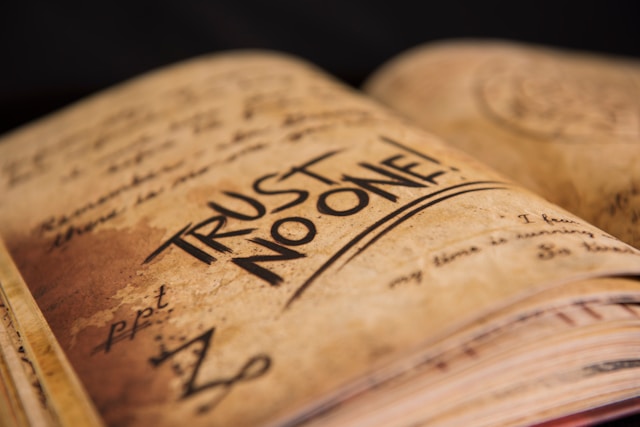
The Collapse of Trust in the Age of AI
A newborn baby lies wailing on a cold sidewalk. A woman rushes in, scoops it up, and vows to protect it. The video is watched by millions. Thousands send money, and strangers flood the comments with tears and prayers. But there was no baby. No woman. Only a scene manufactured by artificial intelligence.
These clips are no longer rare. Social media feeds are filling with fabricated dramas: women beaten by husbands, children abandoned and then rescued by heroes. They look real. They feel urgent. They tug at the heart. But they are generated by machines, designed for one purpose: to grab attention and make money. The danger is not only that these stories are false but that they teach ordinary people to doubt everything they see or hear. That creeping mistrust could transform society in ways more frightening than any internet meme.
At first, the technology seemed like a joke. Millions laughed at surreal cat dramas. But the same tools quickly shifted to darker territory. Videos began to show women crying after abuse, children suffering from illness, or strangers rescuing the vulnerable. These clips are engineered to stir outrage, sympathy, or tears, each one designed to go viral because virality brings ad money. The more dramatic the tale, the bigger the payoff.
This is not speculation. In Los Angeles, a 66-year-old woman named Abigail was duped by computer-generated videos of soap opera star Steve Burton. Convinced she was in a relationship with him, she sent $81,000 in cash and gift cards and eventually sold her family home, wiring over $350,000 more. Only later did her daughter discover that the man she loved had never been there at all. In India, a man lost the equivalent of $80,000 after a fake video showed the country’s finance minister endorsing a bogus investment app. And in Cambodia, donors received appeals with AI-generated images of orphaned children and QR codes for donations that went nowhere. These are not just scams. They are attacks on trust itself.
Imagine a world where no one believes anything they see, read, or hear. Survivors of abuse tell their stories and are met with scorn, their suffering dismissed as another manufactured drama. Journalists expose corruption, yet every investigation is shrugged off as probably fake. In courtrooms, photos, videos, even eyewitness accounts collapse under suspicion, leaving justice paralyzed. Charities plead for help after disasters, but donations wither as people assume scams. Elections dissolve into chaos as real scandals are denied and fake ones spark outrage, while financial markets convulse at false clips of CEOs or politicians. Culture itself fragments, as every story, every memory, every piece of art is doubted, leaving only isolation, cynicism, and mistrust. Without belief, empathy evaporates, cooperation becomes impossible, and the human bonds that hold societies together begin to disintegrate.
History offers warnings. In the twentieth century, governments used propaganda to shape what people believed, but it took years of effort with newspapers, posters, and radio speeches to erode trust. AI can do it instantly. A laptop in one bedroom can flood millions of feeds with tragedies that never happened. The printing press gave us books, social media gave us publishing power, and AI now gives us the power to fabricate reality itself.
The risks are painfully real. A flood of fake scandals days before an election could sway results, and by the time the truth emerges the damage is done. A false video of a CEO announcing bankruptcy could wipe billions from a company’s value in hours. False stories of crimes or disasters could spark panic, violence, or mistrust among neighbors. What begins as a fake baby on TikTok can spiral into crises that shake democracies and economies.
Humans can forgive being fooled, but what we cannot live with is the constant suspicion that everything might be fake. That suspicion, once it hardens, turns into cynicism. People withdraw trust not just from strangers on social media but from friends, neighbors, and even institutions. It becomes easier to shrug and say, I do not believe any of it. When that mindset spreads, cooperation breaks down. A society that believes nothing cannot act together.
The signs are already here. A recent survey found that nearly two-thirds of Americans doubt their ability to tell whether an image is AI-generated (Microsoft study via PC Gamer). That doubt does not remain confined to entertainment, it bleeds into news, politics, charity, and daily life. If that number grows, the very notion of a shared reality begins to collapse.
Stopping this flood will not be easy, but the steps are urgent. Platforms should label AI-generated content as clearly as food labels list ingredients. Governments must require disclosure when AI is used in ads, political campaigns, or fundraising, and deception should carry real penalties. Cameras and editing tools need built-in ways to stamp photos and videos as authentic, so people can trace what is real. Schools and communities must teach media literacy, helping people pause before sharing, and ask whether a story too perfectly designed to tug at the heart might in fact be fake. Journalists and cultural leaders must defend the line between human creativity and machine spectacle. None of these measures will solve the problem fully, but without them the flood of fabricated pain will only rise.
Artificial intelligence is a powerful tool, but when it is turned toward mass-producing lies, it erodes the very foundation of our lives. The deeper danger is not the fake rescues or fabricated dramas, but the slow lesson they teach: that nothing we encounter can be trusted. The greatest casualty of AI will not be jobs or even privacy, it will be belief itself. And once belief collapses, the fragile bonds of trust that sustain communities, economies, and democracies will unravel.